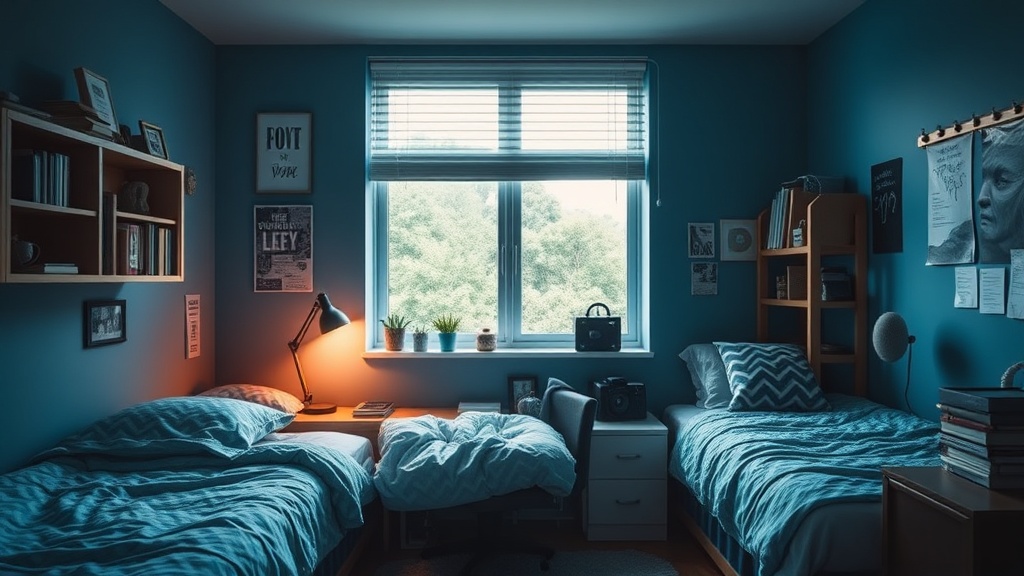
Designing Your Ideal Dorm Room for Deep Focus

Most students believe that a high-end noise-canceling headset or a heavy textbook is the key to productivity. They're wrong. A high-end headset might block out a roommate's music, but it won't fix a room layout that triggers your brain to drift toward sleep or distraction. This guide breaks down how to transform a cramped, standardized dorm room into a functional workspace by focusing on sensory control, lighting, and ergonomic zones. We’ll look at how to manipulate your physical environment to signal to your brain that it's time to work.
How Do You Create a Productive Study Zone in a Small Dorm?
The best way to create a productive zone is to establish a strict physical boundary between your "sleep space" and your "work space." In a tiny dorm room, these two areas often bleed together, which is why you find yourself scrolling on your phone in bed instead of studying. You need to create a psychological "switch" that happens when you sit at your desk.
First, look at your desk placement. If your desk faces your bed, you're going to lose the battle against procrastination. Every time you glance up, you'll see your pillows—a massive temptation. If possible, turn your desk to face a wall or a window. This minimizes visual distractions.
Second, use lighting to define the zone. You shouldn't be studying under the harsh, buzzing fluorescent lights that come standard in most university housing. Those lights are terrible for your circadian rhythm and make your eyes ache after an hour. Instead, get a dedicated desk lamp with adjustable color temperatures.
- Warm light: Best for reading or relaxing before bed.
- Cool/Blue light: Best for high-intensity focus and alertness.
- Natural light: Always try to position your workspace near a window if the layout allows.
That said, don't rely solely on your desk lamp. A small, clip-on light for your laptop or a small LED strip can provide enough light to keep you focused without the eye strain. If you're working late, a dim light is much better for your eyes than staring into a dark room with one bright screen.
If you struggle with the actual act of starting, check out our guide on beating procrastination with the 5-minute rule. It helps bridge the gap between "sitting down" and "actually working."
What Is the Best Desk Setup for Long Study Sessions?
The best desk setup prioritizes ergonomics and minimizes physical discomfort to prevent fatigue. You can't focus if your neck is cramping or your lower back is throbbing. Most dorm desks are notoriously uncomfortable—they're often just a flat piece of particle board with a cheap plastic chair.
You'll likely need to invest in a few key items to make a standard desk usable for more than thirty minutes. Here is a breakdown of the essentials:
| Item | Why It Matters | Recommended Brand/Type |
|---|---|---|
| Laptop Stand | Raises screen to eye level to prevent neck strain. | Twelve South or a basic aluminum stand. |
| External Keyboard | Allows you to use a laptop stand effectively. | Logitech K380 (portable and quiet). |
| Seat Cushion | Adds much-needed support to dorm chairs. | way Memory foam cushion.|
| Blue Light Glasses | Reduces digital eye strain during late nights. | Felix Gray or generic amber lenses. |
Don't overlook the importance of your chair. Most dorm chairs are designed for sitting, not for "studying." If you can, find a way to add lumbar support. Even a rolled-up towel placed behind your lower back can make a massive difference during a three-hour library session or a late-night cram session.
One thing to watch out for is the "laptop hunch." When you're deep in a project, you tend to lean forward. This isn't just bad posture—it's a distraction. A laptop stand (even a cheap one from Amazon) keeps your eyes looking forward, which keeps your spine more upright. It's a small change, but it keeps you in the chair longer.
How Can You Block Out Dorm Noise?
You can block out noise by using a combination of active noise-canceling technology and ambient sound masking. Dorms are loud. Between the person down the hall playing video games and the inevitable heavy footsteps in the hallway, total silence is a myth. You have to build a sound barrier.
There are two main ways to handle this. You can go the "active" route or the "passive" route.
- Active Noise-Canceling (ANC): This is the most effective method. High-quality headphones like the Sony WH-1000XM5 or the Bose QuietComfort series use microphones to pick up external sounds and create an "anti-noise" signal. They are expensive, but they are a legitimate investment in your GPA.
- Sound Masking: If you can't afford $300 headphones, use white noise. Apps or websites like Wikipedia's entry on White Noise can point you toward different frequencies. Brown noise is often better for deep focus because it has a lower, more soothing frequency than the high-pitched hiss of white noise.
If you're on a budget, even cheap foam earplugs can help. But keep in mind, earplugs don't "cancel" sound—they just muffle it. If your roommate is yelling, you'll still hear them. This is why a combination of earplugs and a steady stream of lo-fi beats or brown noise is the ultimate setup. It creates a "sound cocoon" that makes the rest of the world disappear.
It's worth noting that some people find music with lyrics distracting. If you're trying to memorize complex terms or write an essay, switch to instrumental music. Lyrics engage the language-processing part of your brain, which competes with your ability to write or read. Use lo-fi hip hop or classical music to keep the background energy high without the cognitive load.
One thing to consider: don't use noise-canceling headphones as a permanent way to live. If you wear them 24/7, your ears might get irritated, and you might miss important things (like a fire alarm or a roommate asking for help). Use them specifically for your "deep work" blocks.
Designing your room isn't about making it look "aesthetic" for an Instagram post. It's about creating a space that respects your brain's need for focus. When you control your light, your sound, and your physical posture, you aren't just studying harder—you're studying smarter. You're building an environment that supports your goals rather than fighting against them.